
Live vs. Inactive Probiotics: What the Research Says — and Why Both Can Fail People with IBS
Posted by The CodonRX Science Team on Jun 3rd 2026
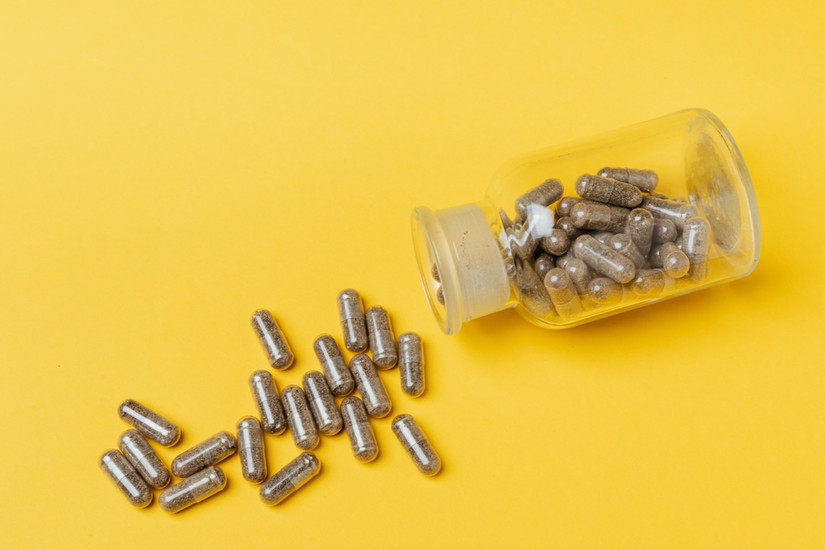
The probiotic market has begun splitting into two camps. In one: traditional live-culture supplements — billions of viable bacteria in a capsule, often refrigerated to preserve potency. In the other: a newer category of heat-killed or inactivated probiotics, marketed for shelf stability and a growing body of evidence suggesting that dead bacteria can still modulate immune function.
The debate between the two is real, and the research on both is more nuanced than most supplement labels suggest. But for people with IBS, both sides of the argument are missing a more fundamental question — one that neither live nor inactive probiotics, as they are commonly formulated, address.
What Are Live Probiotics?
Live probiotics contain viable bacteria — organisms capable of surviving digestion, adhering to the gut epithelium, and temporarily colonizing the mucosal lining. The majority of clinical evidence supporting probiotic use for digestive health was built on live-culture formulations, and they remain the dominant product category on the market.
What the research supports
- Gut epithelium adhesion and transient colonization, producing localized effects on the mucosal immune environment
- In-situ metabolite production — short-chain fatty acids, enzymes, and B vitamins synthesized directly in the gut
- Competitive exclusion: live organisms compete with pathogens for adhesion sites and nutrients
- Largest evidence base of the two categories for IBS, antibiotic-associated diarrhea, and infectious diarrhea outcomes
Limitations
- Susceptible to heat, moisture, and oxygen — potency can degrade before the product is opened
- Survival through stomach acid and bile is strain-dependent and often poorly documented
- CFU counts stated “at time of manufacture” may be significantly lower by the expiration date
- LTA — a pro-inflammatory surface molecule — is present on the cell wall of every standard gram-positive strain
What Are Inactive (Heat-Killed) Probiotics?
Inactive probiotics — variously called heat-killed, tyndallized, or “paraprobiotic” formulations — are bacteria subjected to a process (heat, UV, or pressure) that renders them non-viable. The cells are dead but structurally intact. A 2021 consensus statement from the International Scientific Association for Probiotics and Prebiotics (ISAPP) introduced “postbiotics” as the formal category, defining them as “a preparation of inanimate microorganisms and/or their components that confers a health benefit on the host.”1
The rationale for this category is legitimate: structural components of the bacterial cell wall — including surface proteins, polysaccharides, and cell wall fragments — can interact with gut immune receptors even without the bacteria being alive. Researchers have documented immune-modulating effects from heat-killed strains in several contexts.2
What the research supports
- Room-temperature shelf stability — not killed by improper storage or transit
- Not destroyed by stomach acid or bile — structural components reach the intestine intact
- Consistent dosing: bacterial count does not change between manufacturing and use
- Potentially safer for immunocompromised patients who cannot risk live-bacterial supplementation
- Some documented immune-modulating effects via interaction with gut-associated immune cells
Limitations
- Cannot colonize the gut epithelium or reproduce — no competitive exclusion, no sustained mucosal presence
- Cannot produce metabolites (SCFAs, enzymes, vitamins) in the gut
- Smaller evidence base than live probiotics for most IBS-specific outcomes
- LTA — the pro-inflammatory surface molecule — is retained intact on the cell wall after heat killing and remains immunologically active
Live vs. Inactive: Where Each Performs Better
| Factor | Live Probiotics | Inactive (Heat-Killed) |
|---|---|---|
| Gut colonization | Yes — adheres to epithelium, transient mucosal presence | No — passes through without colonizing |
| Metabolite production | Yes — SCFAs, enzymes, B vitamins synthesized in-situ | No — bacteria cannot metabolize in the gut |
| Stability | Variable — sensitive to heat, moisture, acid; potency declines | High — room-temperature stable; not degraded by stomach acid |
| Immune interaction | Direct — viable cells interact with mucosal immune system | Structural — cell wall components interact with gut immune receptors |
| Evidence base | Large — decades of clinical trials across many conditions | Growing — increasing research, but smaller IBS-specific evidence base |
| LTA on cell wall | Present — on every standard gram-positive strain | Present — retained intact after heat killing; remains immunologically active |
The Thing Both Categories Leave Out
Here is what the live vs. inactive debate does not resolve: lipoteichoic acid.
LTA is a structural glycolipid anchored in the cell wall of all gram-positive bacteria — including every Lactobacillus and Bifidobacterium species used in commercial probiotics, live or heat-killed. It acts as a molecular signal that the gut immune system recognizes through Toll-like receptor 2 (TLR2). In a healthy gut, TLR2 activation plays a role in normal immune calibration. In an IBS gut — where the mucosal lining is already in a state of heightened reactivity — that same TLR2 signal can drive the inflammatory cascade responsible for cramping, urgency, and bloating.
The critical detail that marketing rarely mentions: heat-killing bacteria does not destroy LTA. LTA is a robust structural component of the bacterial cell wall. It retains its three-dimensional architecture and its capacity to activate TLR2 even after the organism that produced it is dead. Switching to an inactive probiotic does not remove LTA from the equation — it simply changes the packaging it arrives in.
Whether a probiotic is live or heat-killed, if it contains standard Lactobacillus or Bifidobacterium species, LTA is present on its surface. For people with IBS, this is the variable that neither category addresses.
Research published in PNAS (2011) by Mohamadzadeh et al. demonstrated this mechanism directly: wild-type L. acidophilus carrying LTA stimulates pro-inflammatory cytokine production (IL-12, TNFα) in gut dendritic cells via TLR2. The LTA-deficient variant produces the opposite response: anti-inflammatory IL-10, with reduced activation of the CD4+ T-cells implicated in IBS immune reactivity.3 The difference had nothing to do with viability — it had to do with whether LTA was present on the cell surface.
NCK2025™ — A Live Probiotic Without the LTA Problem
NCK2025™, the patented strain in CodonRX, was developed at North Carolina State University using CRISPR-based characterization to eliminate LTA synthesis entirely. It retains everything that makes L. acidophilus clinically valuable — gut epithelium adhesion, mucosal support, viable colonization, and in-situ metabolite production — while removing the specific molecule responsible for immune activation in a reactive gut.
This distinction matters precisely in the context of the live vs. inactive debate. One reason researchers have explored heat-killed formulations is to reduce the unpredictable immune response associated with LTA. NCK2025™ achieves that goal in a living, colonizing organism. You don’t have to choose between the colonization and metabolite benefits of a live probiotic and the reduced inflammatory signal of an inactivated one.
Two US patents (9,340,792 and 9,980,992) cover the strain. The mechanism was validated independently in a peer-reviewed PNAS publication — not by the manufacturer.
If you have IBS and are evaluating probiotics, “live” vs. “inactive” is a secondary question. The primary question is whether the strain you’re taking carries LTA. For standard probiotic species — L. acidophilus, L. rhamnosus, L. plantarum, any Bifidobacterium — the answer is yes, whether the product is a refrigerated live-culture capsule or a shelf-stable inactivated formulation.
Discover what CodonRX can do for you.
Shop CodonRX® 30-day supply · Patented NCK2025™ · Made in the USAReferences & Notes
- Salminen S, et al. “The International Scientific Association of Probiotics and Prebiotics (ISAPP) consensus statement on the definition and scope of postbiotics.” Nature Reviews Gastroenterology & Hepatology. 2021;18(9):649–667. Establishes the formal definition of postbiotics, including inanimate microorganisms and their structural components.
- Taverniti V & Guglielmetti S. “The immunomodulatory properties of probiotic microorganisms beyond their viability (ghost probiotics: proposal of paraprobiotic concept).” Genes & Nutrition. 2011;6(3):261–274. Reviews evidence for immune effects of heat-killed bacterial preparations and introduces the paraprobiotic framework.
- Mohamadzadeh M, et al. “Regulation of induced colonic inflammation by Lactobacillus acidophilus deficient in lipoteichoic acid.” Proceedings of the National Academy of Sciences (PNAS). 2011;108 Suppl 1:4623–30. Demonstrates that LTA — not bacterial viability — is the determinant of the pro-inflammatory immune response to L. acidophilus in the gut.
These statements have not been evaluated by the Food and Drug Administration. This product is not intended to diagnose, treat, cure, or prevent any disease.